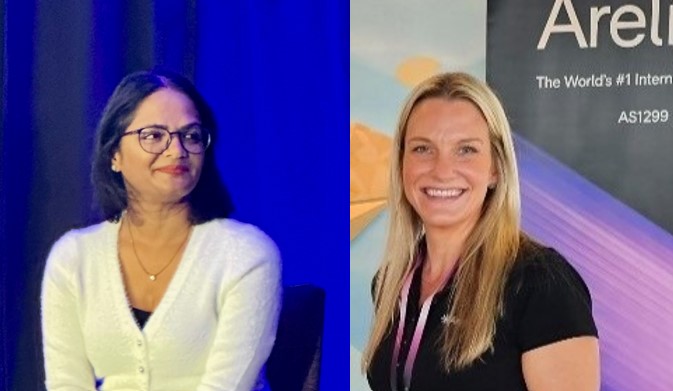
Employee Spotlight: Gagun Gahir, Head of Enterprise Sales, EMEA

We strive to empower women in our organization, but we understand there is plenty of progress to make. Gagun Gahir joined us in December 2024 as the Head of Enterprise Sales in the EMEA region. She’s also a passionate DEI ambassador. We spoke with Gagun to learn about her background, her experience with Arelion’s culture and her vision of improving DEIB initiatives.
Q: What was your experience in your early career as a woman in tech? Were there mentors or skill sets that helped you overcome the challenges you faced?
I started my telecommunications career as a customer retention agent in a call center. Within a month, my boss asked me to hire a team to educate our agents on the benefits of our carrier-pre-select service. My manager’s trust in me (a fresh university graduate with no leadership experience beyond managing bar staff!) gave me a leg up onto the leadership ladder. It was a baptism by fire. I made many mistakes and learned a lot very quickly. In hindsight, I appreciate that many women don’t progress past that “broken rung” or the first step from individual contributor to leadership. I’ve always been brave in the face of hierarchy and seek to understand the actual human within the professional in front of me. We all have common challenges, fears and aspirations. If you build relationships on that common ground, you can progress toward shared goals together.
Q: How has Arelion supported you as a woman in tech? How is Arelion different from other tech companies?
There’s a difference between mentorship and sponsorship. Not only have I fostered relationships with mentors before joining Arelion, but I’ve also had executive sponsorship supporting me here. It’s made onboarding much less stressful by helping me get up and running within a few months. With the support of the team around me and the executives leading our strategy, I feel much more comfortable expressing opinions or questions. It’s been a hugely inclusive experience so far. Arelion’s size and scale help me make quicker impacts through the level of trust around me.
Q: What are the biggest barriers or challenges facing women in tech today?
Unconscious bias, hands down. The language we use is a barrier to defining job roles and a precursor to how we unconsciously judge women who apply for tech jobs. The industry speaks in the language of “he” – whether that’s the language we use, the images we see in presentations, the topics we cover in panel sessions, the mode of socializing, the policies we support and more. For example, not every organization offers equal parental leave, meaning women generally must take a career break. Not every organization has a menopause policy, meaning many of the symptoms are misunderstood, and women leave work due to subpar support. Women are still paid less than men and are assumed to handle most care duties related to children, aging parents and so on. Since women are assumed to perform these duties, employers often subconsciously or consciously believe women are less dedicated to their work, resulting in employers being less likely to invest resources into them. This translates to less flexibility for travelling, networking activities, professional development and other career advancement opportunities.
Q: How has the professional landscape for women in tech/telecom changed since you entered the field?
I do think there is more awareness around professional behavior. Many organizations have adopted Diversity, Equity, Inclusion and Belonging (DEIB) policies and SMART targets. These are swinging the pendulum and creating a more conscious effort to support, mentor, sponsor, empower, educate and upskill women. Unfortunately, these initiatives are still not ubiquitous and, anecdotally, they depend on the size, maturity and public or private nature of the organization, as well as the budgets available to support these initiatives.
Q: How can we create a more welcoming environment for women and underrepresented groups seeking a career in tech and telecom?
A welcoming environment is nice, but we need inclusive environments. Diversity thrives when we consciously consider the lived experience of someone who isn’t in a majority group and create a safe environment for everyone to be themselves and participate with a sense of belonging. Many oft-quoted studies show businesses are more profitable if they are truly inclusive and diverse from the board downwards. So, companies must invest in DEIB as a business imperative, harness the skill sets of diverse people, reflect the global customers they serve and create an environment where they retain top talent. These initiatives can facilitate more supportive environments for women in tech today while fostering opportunities for tomorrow’s female leaders to excel and innovate in a traditionally male-dominated industry.


As a subscriber you will receive: